-
How To Use Drone Talk
- Notizie
- EXPLORE
- Pagine
- Gruppi
- Events
- Reels
- Blogs
- Classifieds
- Jobs
- Courses
- Forums
- Merits
-
 The Complete Drone Guide
-
 Best Drones for Beginners
-
 Drone Beginner’s Master Guide
-
 How to Fly a Drone
-
 Drone Laws and FAA Regulations
-
 How to Become a Drone Pilot
-
 Drone Photography Guide
-
 Drone Parts and Accessories
-
 FPV Drones
-
 Commercial Drone Services
-
 Drone Jobs
-
 DJI Drones
-
 Used Drones
-
 Drone Mapping and Surveying
-
 Drone Racing
-
 Drone Talk Complete User Guide and Knowledge Base
-
 Drone Terminology Dictionary
Aerial Drone Mapping Guide
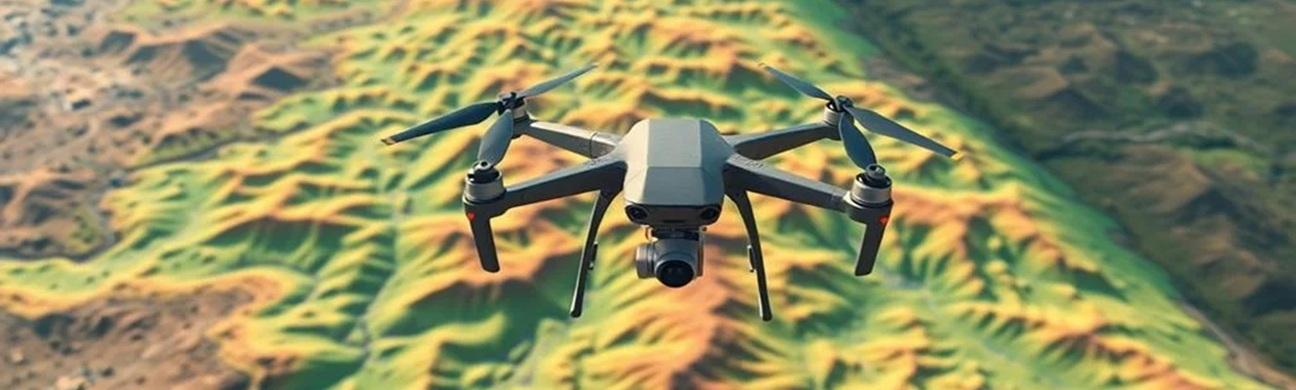
How to Become a Drone Mapper in 2026: The Complete Guide to Drone Mapping, Photogrammetry, and High‑Accuracy Aerial Data
Drone mapping has become one of the fastest‑growing and highest‑paying sectors in the drone industry. As businesses across construction, agriculture, real estate, mining, and energy shift toward data‑driven decision‑making, the demand for accurate aerial maps and 3D models has skyrocketed. If you’ve been considering a career in drone mapping—or want to add mapping services to your existing drone business—this guide will walk you through everything you need to know.
This is a comprehensive, SEO‑optimized guide covering certifications, equipment, software, workflows, accuracy standards, and real‑world opportunities.
⭐ What Is Drone Mapping? (Definition + Why It Matters)
Drone mapping is the process of capturing aerial images with a UAV and converting them into geospatial data products using photogrammetry or LiDAR. These outputs include:
-
Orthomosaic maps (high‑resolution, distortion‑free top‑down imagery)
-
3D point clouds
-
Digital Elevation Models (DEM, DSM, DTM)
-
Contour lines
-
Volumetric measurements (stockpiles, cut/fill)
-
Vegetation indexes (NDVI, GNDVI, VARI)
-
3D textured models for planning and visualization
Drone mapping replaces expensive helicopter flights, manual surveying, and slow ground‑based measurements. It delivers faster, safer, and more accurate data at a fraction of the cost.
🎯 Why Drone Mapping Is a High‑Value Career Path
Drone mapping is one of the most profitable drone services because:
-
Businesses already understand the value of aerial data
-
Mapping requires specialized skills (less competition)
-
Deliverables directly impact budgets, timelines, and safety
-
Many industries require recurring mapping (weekly, monthly, quarterly)
Average drone mapping project value: $500–$3,500 per job depending on size, accuracy, and deliverables.
Top industries hiring drone mappers:
| Industry | Why They Need Drone Mapping |
|---|---|
| Construction | Progress tracking, earthwork volumes, site planning |
| Agriculture | Crop health, plant stress, irrigation analysis |
| Mining & Aggregates | Stockpile volumes, pit mapping, safety |
| Real Estate Development | Land planning, 3D models, marketing |
| Utilities & Energy | Inspections, corridor mapping |
| Insurance & Roofing | Damage assessment, measurements |
If you want a drone career with consistent demand, mapping is the sweet spot.
🛩️ Step 1: Get Legally Certified (Part 107 in the U.S.)
To fly drones commercially in the United States, you must have an FAA Part 107 Remote Pilot Certificate.
You’ll need to understand:
-
Airspace classifications
-
Weather (METARs, TAFs)
-
Drone regulations
-
Emergency procedures
-
Crew resource management
-
Radio communications
Once certified, you can legally perform mapping missions for clients.
🛠️ Step 2: Choose the Right Drone for Mapping
Not all drones are suitable for mapping. You need a drone with:
-
20MP+ camera
-
Mechanical shutter (prevents rolling‑shutter distortion)
-
Long flight time
-
RTK or PPK positioning for survey‑grade accuracy
-
Automated flight mission capability
Best Drones for Mapping in 2026
| Drone | Best For | Notes |
|---|---|---|
| DJI Mavic 3 Enterprise (M3E) | Most users | Compact, RTK, 20MP mechanical shutter |
| DJI Phantom 4 RTK | Surveying | Legendary accuracy, still widely used |
| DJI Matrice 350 RTK | Enterprise | Supports LiDAR, multispectral, thermal |
| Autel EVO II Pro RTK | DJI alternative | Strong camera, good accuracy |
If you’re starting out, the Mavic 3 Enterprise offers the best balance of price, portability, and accuracy.
🗺️ Step 3: Learn Drone Mapping Software (Flight + Processing)
Drone mapping requires two types of software:
1. Flight Planning Software
Used to automate grid missions with proper overlap.
-
DJI Pilot 2
-
DroneDeploy Flight
-
Pix4D Capture
-
Litchi Mission Hub
2. Photogrammetry Processing Software
Used to convert images into maps and 3D models.
-
Pix4D Mapper – Survey‑grade accuracy
-
DroneDeploy – Easiest for beginners
-
Agisoft Metashape – Extremely powerful
-
WebODM – Free and open source
Learning how to process data is just as important as learning how to fly.
📸 Step 4: Master the Drone Mapping Workflow
A professional drone mapper follows a consistent, repeatable workflow.
1. Pre‑Planning
-
Check airspace
-
Review weather
-
Plan flight altitude
-
Set front/side overlap (70–80%)
-
Identify obstacles
-
Plan ground control points (GCPs) if needed
2. Flight Execution
-
Fly automated grid missions
-
Maintain consistent altitude
-
Use RTK for high accuracy
-
Capture nadir and oblique images if needed
3. Data Processing
-
Import images
-
Align photos
-
Generate point cloud
-
Create orthomosaic
-
Build DEM/DSM
-
Clean and classify data
4. Deliverables
Depending on the client, you may deliver:
-
Orthomosaic TIFF
-
Contour lines
-
3D point cloud (LAS/LAZ)
-
DSM/DTM
-
Volume reports
-
Crop health maps
-
3D textured models
📏 Step 5: Understand Accuracy, GSD, RTK, and GCPs
This is where drone mapping becomes a real technical skill.
Key Concepts Every Drone Mapper Must Know
-
GSD (Ground Sampling Distance) – Determines map resolution
-
RTK vs PPK – Real‑time vs post‑processed accuracy
-
GCPs (Ground Control Points) – Used for survey‑grade accuracy
-
Overlap – Ensures proper photogrammetry reconstruction
-
Coordinate systems – EPSG codes, local grids, state plane
-
Accuracy reports – RMSE, reprojection error, checkpoints
The more you understand these, the more you can charge.
💼 Step 6: Build a Portfolio and Start Getting Clients
Drone mapping clients want to see proof of accuracy and quality.
What to Include in Your Portfolio
-
Sample orthomosaics
-
3D models
-
Volume reports
-
Before/after progress maps
-
NDVI crop maps
-
Accuracy reports
How to Stand Out
-
Offer fast turnaround
-
Provide clean, professional reports
-
Demonstrate accuracy with checkpoints
-
Use RTK or GCPs
-
Build a clean, modern website
🔮 The Future of Drone Mapping (2026–2030)
Drone mapping is evolving rapidly. Expect to see:
-
AI‑powered automated analysis
-
Real‑time mapping directly from the drone
-
Swarm mapping missions
-
Higher‑accuracy sensors
-
Digital twins integrated with BIM
-
Cloud‑based processing with instant results
If you start now, you’re entering the industry at the perfect time.
- Drone News
- Drone Reviews
- DJI Drones
- FPV Drones
- Drone Racing
- Aerial Photography
- Aerial Videography
- Drone Tutorials
- Drone Buying Guides
- Drone Regulations
- Commercial Drone Use
- Drone Technology
- Drone Parts
- Drone Accessories
- Drone Builds
- Drone Mapping & Surveying
- Agricultural Drones
- Drone Business
- Drone Jobs
- Drone Safety
- Drone Community

 English
 Arabic
 French
 Spanish
 Portuguese
 Deutsch
 Turkish
 Dutch
Dutch
 Russian
 Romaian
 Portuguese (Brazil)
 Greek
Greek